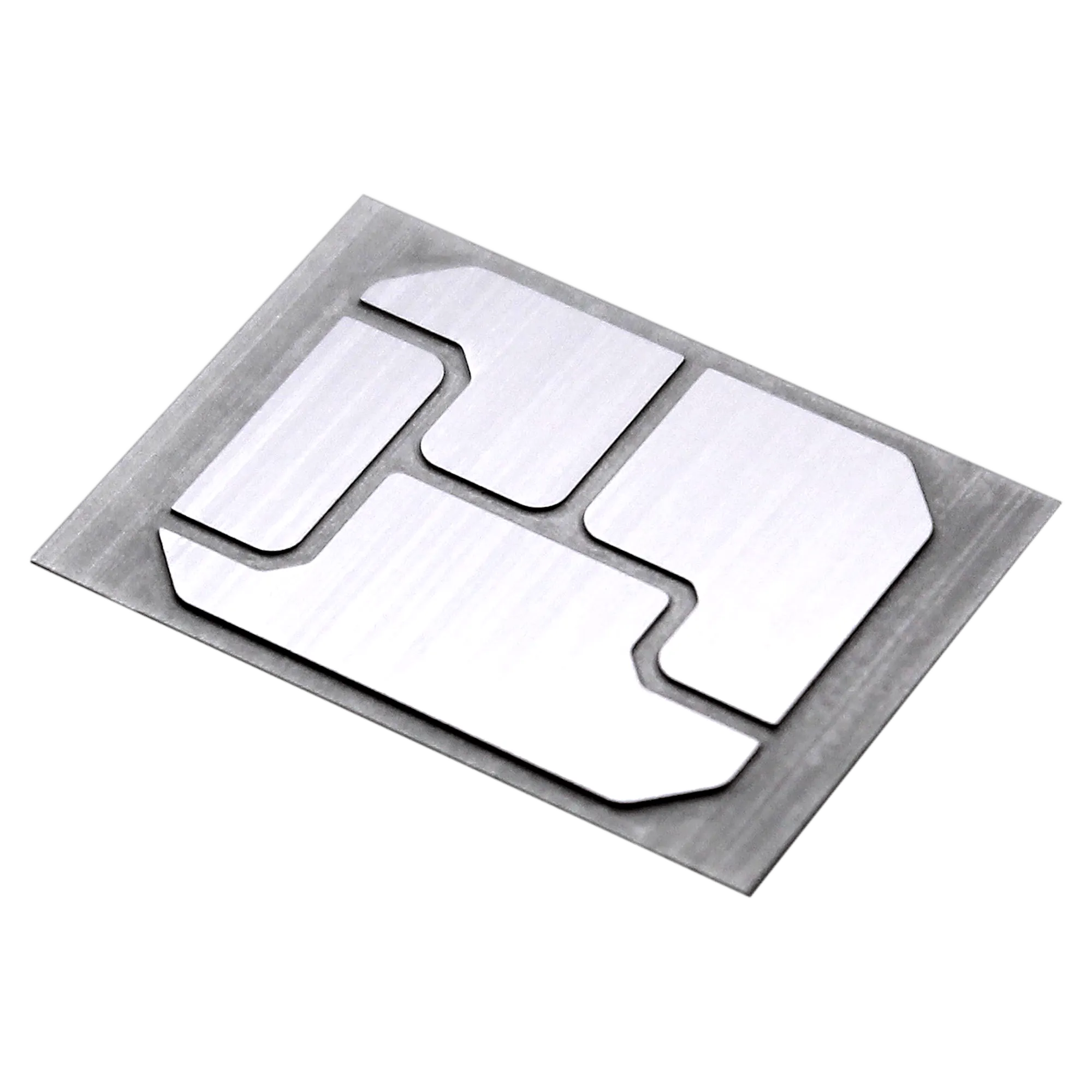

Titanium has become one of the most important engineering materials across today’s most demanding industries. Its exceptional combination of low weight, high strength, corrosion resistance, and biocompatibility makes it the material of choice for applications where performance, reliability, and long service life are critical. From implantable medical devices to aerospace structures and advanced defense systems, engineers continue to specify titanium when failure is not an option.
Despite its advantages, titanium presents unique manufacturing challenges. Conventional fabrication methods such as CNC machining and laser cutting can be time-consuming, generate significant tool wear, and introduce burrs, distortion, and thermal effects that may compromise the material’s performance. Producing intricate features in thin metal sections can also increase cost and complexity.
PEI provides a different approach through precision chemical etching and photochemical machining. Rather than removing material mechanically, our controlled process selectively etches titanium, producing highly precise components while preserving the material’s original properties. The result is lightweight, high-performance titanium parts with complex geometries, tight tolerances, and exceptional repeatability—without introducing mechanical stress or unwanted heat.
Whether you’re evaluating titanium for a new design or looking to improve manufacturability, this page explains why engineers choose titanium, the grades PEI supports, how our photochemical machining process works, and the industries and applications where etched titanium delivers the greatest value.
Titanium (Ti) occupies a unique position among engineering materials because it combines properties that are rarely found together in a single metal. It delivers outstanding mechanical performance while remaining significantly lighter than many alternative alloys, making it ideal for components where weight, strength, and reliability must all be optimized.
PEI is a leader in the photochemical etching of titanium, delivering burr-free, stress-free, and dimensionally precise parts for aerospace, medical, defense, electronics, and advanced technology sectors. We produce bipolar electrolyzer plates used in the production of hydrogen energy, and meshes and implants for medical procedures. Our experts have extensive experience in engineering, titanium photochemical etching, finishing, and quality assurance services.
Key properties of titanium include:
Titanium is renowned for its exceptional strength relative to its weight. This allows engineers to reduce component mass without sacrificing structural integrity, improving efficiency across aerospace systems, medical devices, and other high-performance applications.
Reducing weight while maintaining strength can improve fuel efficiency, increase payload capacity, and enhance overall product performance, making titanium a preferred material wherever lightweight design is a priority.
One of titanium’s defining characteristics is its natural corrosion resistance. A stable oxide layer forms on the material’s surface, protecting it from aggressive chemicals, saltwater, moisture, and many industrial environments.
This inherent durability makes titanium well suited to applications including:
Its corrosion resistance also contributes to a longer service life and reduced maintenance requirements.
Titanium’s outstanding biocompatibility has made it one of the most widely specified materials for implantable medical devices. Because the material is well tolerated by the human body, it is commonly used for:
Maintaining the material’s original properties throughout manufacturing is critical to patient safety, which is why photochemical machining is particularly well suited to medical applications.
Learn more about our Medical Industry Capabilities.
Many components experience repeated loading throughout their service life.
Titanium’s excellent fatigue resistance allows it to withstand cyclic stresses over extended periods while maintaining structural integrity, making it particularly valuable for aerospace, defense, and industrial systems where reliability is essential.
Few engineering materials perform as consistently as titanium under challenging operating conditions.
Its combination of strength, corrosion resistance, durability, and low weight enables components to perform reliably across industries where environmental exposure, mechanical loading, and long-term stability are major design considerations.
For engineers developing high-performance products, titanium offers the ability to balance mechanical performance with weight reduction without compromising reliability.
Selecting the appropriate titanium alloy is essential to achieving the desired balance of mechanical properties, manufacturability, corrosion resistance, and cost.
PEI supports multiple titanium grades for precision photochemical machining, helping engineers select the most appropriate material based on application requirements.
Commercially Pure Titanium is valued for its excellent corrosion resistance, ductility, and biocompatibility.
Although lower in strength than alloyed titanium grades, CP Titanium performs exceptionally well in environments where corrosion resistance and chemical stability are the primary requirements.
Typical applications include:
Because photochemical machining removes material without mechanical force, engineers can produce intricate CP Titanium components while maintaining the material’s original characteristics.
Titanium 6Al-4V (Grade 5) is one of the most widely-specified titanium alloys across aerospace and medical engineering.
Its outstanding combination of strength, fatigue resistance, and durability makes it ideal for applications requiring maximum mechanical performance while maintaining low weight.
Common applications include:
When manufactured using photochemical machining, Grade 5 titanium retains its exceptional mechanical characteristics while enabling intricate geometries that would be difficult or costly to produce using conventional fabrication techniques.
PEI works closely with customers to prepare designs for production by recommending the most appropriate titanium grade based on operating environment, performance requirements, manufacturability, and overall project objectives.
Titanium is one of the most capable yet challenging engineering materials to manufacture. Its strength, toughness, and low thermal conductivity make conventional fabrication difficult, particularly when producing thin sections or intricate features. PEI’s photochemical machining process overcomes these challenges by removing material chemically rather than mechanically, allowing engineers to etch titanium with exceptional precision while preserving the material’s original properties.
Unlike traditional fabrication methods that rely on cutting tools or thermal energy, photochemical machining uses digital imaging and controlled chemical etching to produce complex titanium components with outstanding repeatability and dimensional accuracy.
The process begins by applying a light-sensitive photoresist to the titanium sheet. Digital artwork defining the finished component is transferred onto the material using precision imaging technology before exposure to ultraviolet light.
This digital workflow replaces hard tooling entirely, allowing designs to be modified quickly without manufacturing new dies or fixtures. Engineers can rapidly iterate designs while maintaining precise dimensional control from prototype through production.
Following imaging, the exposed titanium is removed using a carefully controlled chemical solution specifically developed for titanium etching.
Historically, chemistries containing hydrofluoric acid have been used within the broader industry to process titanium, although modern manufacturing utilizes tightly controlled proprietary processes designed to deliver exceptional accuracy, consistency, and safety.
Because material removal occurs uniformly across the part, the process creates highly accurate geometries while preserving the surrounding material.
One of the greatest advantages of photochemical machining is that it preserves the titanium’s original characteristics throughout the manufacturing process.
Unlike machining or laser cutting, the process introduces no mechanical force or localized heating. This allows the finished component to retain its strength, fatigue resistance, corrosion resistance, and dimensional stability while achieving intricate features that would be difficult to manufacture using conventional methods.
Learn more about our precision Precision Chemical Machining Process.
Combining titanium’s exceptional material properties with photochemical machining allows engineers to develop components that are both high-performing and highly manufacturable.
The key benefits this precision process delivers include:
Traditional machining removes material through physical cutting forces that can introduce residual stresses or distortion, particularly in thin sections.
Photochemical machining eliminates these concerns by dissolving exposed material chemically rather than mechanically. The process maintains the integrity of the base material while preserving flatness and dimensional accuracy.
Thermal cutting processes can alter the structure of titanium near the cut edge through localized heat input.
Photochemical machining generates no thermal damage, producing components free from heat-affected zones while maintaining consistent material properties throughout the finished part.
For applications where long-term reliability is critical, preserving the original properties of titanium can have a significant impact on component performance.
Titanium’s strength often makes intricate machining difficult and expensive.
Photochemical machining allows engineers to produce:
Because there is no cutting tool restricting geometry, engineers have greater freedom to optimize performance rather than design around manufacturing limitations.
One of the major advantages of photochemical machining is the speed at which designs can evolve.
Instead of manufacturing new tooling every time a revision is required, engineers simply update the digital artwork.
This enables:
For development programs under tight schedules, this flexibility significantly reduces project risk while accelerating time to market.
Titanium has become one of the most widely specified materials throughout the medical industry because of its excellent biocompatibility, corrosion resistance, and long-term stability inside the human body.
PEI manufactures precision titanium components used across a broad range of medical applications, including:
Photochemical machining enables engineers to manufacture delicate medical components with intricate geometries while maintaining the material’s original properties. Burr-free edges, excellent dimensional accuracy, and repeatable manufacturing all contribute to consistent component quality for demanding medical applications.
Because no mechanical stress or thermal damage is introduced during manufacturing, titanium components remain ideally suited to demanding medical applications where reliability is paramount.
Explore our Medical Industry Solutions.
Few industries place greater demands on materials than aerospace and defense.
Titanium’s outstanding strength-to-weight ratio enables engineers to reduce system weight while maintaining exceptional structural performance, making it an ideal material for high-performance aircraft, spacecraft, and defense platforms.
PEI supports manufacturers producing precision titanium components for applications including:
Photochemical machining enables complex lightweight geometries that would be challenging to manufacture using conventional processes while maintaining excellent repeatability from prototype through production.
The combination of low weight, exceptional durability, corrosion resistance, and manufacturing precision makes titanium one of the most valuable engineering materials for mission-critical applications where long-term reliability cannot be compromised.
Learn more about our Aerospace & Defense Industry Capabilities.
PEI combines decades of photochemical machining expertise with extensive titanium manufacturing experience to deliver precision components for some of the world’s most demanding industries. Our capabilities support projects ranging from early-stage prototypes to full production while maintaining the accuracy, repeatability, and material integrity engineers expect from high-performance titanium components.
Whether manufacturing lightweight aerospace assemblies, medical devices, or advanced technology components, our controlled photochemical machining process enables customers to produce complex titanium parts with exceptional consistency.
Titanium’s unique properties make it an excellent material for thin, lightweight components, but they can also make conventional machining difficult.
PEI specializes in manufacturing precision titanium components from thin material while maintaining flatness, dimensional accuracy, and consistent feature quality throughout production.
Many titanium applications demand exceptional dimensional control.
Our photochemical machining process enables engineers to manufacture intricate features with highly repeatable results, supporting assemblies where even minor dimensional variation can affect fit, function, or long-term performance.
Mechanical cutting operations frequently produce burrs that require additional finishing before assembly.
Photochemical machining produces clean, burr-free edges directly from the manufacturing process, reducing secondary operations while improving consistency across production volumes.
PEI manufactures titanium components featuring:
Because photochemical machining removes material chemically rather than mechanically, increasing design complexity has little impact on manufacturability.
Our digital manufacturing workflow enables rapid prototype development while providing a seamless transition into production.
Without hard tooling, design revisions can be implemented quickly, allowing engineering teams to validate concepts faster before moving into repeatable production.
Consistency is critical across regulated industries such as medical, aerospace, and defense.
PEI’s controlled manufacturing processes, rigorous inspection procedures, and ISO-certified quality systems ensure every production run delivers the same high level of precision and repeatability.
Selecting a manufacturing partner involves more than simply finding someone who can process titanium. It requires confidence that every component will meet demanding engineering specifications while supporting efficient product development from concept through production.
PEI is the trusted choice for titanium photo-chemical etching, delivering burr-free, stress-free, and dimensionally precise parts for aerospace, medical, defense, electronics, and advanced technology sectors. Backed by AS9100D, ISO 9001/14001, ITAR, RoHS, and NADCAP certifications, we meet the most rigorous global quality and compliance standards.
Photochemical machining has been PEI’s core capability for decades.
Our engineering and manufacturing teams have extensive experience producing precision titanium components for highly regulated industries where quality, accuracy, and repeatability are essential.
By combining advanced manufacturing technology with application-specific engineering knowledge, we help customers solve complex design challenges that traditional manufacturing methods often cannot.
Titanium behaves differently from most engineering metals.
PEI understands how to optimize designs for Commercially Pure Titanium and Titanium 6Al-4V, ensuring each component balances manufacturability with mechanical performance, corrosion resistance, and durability.
Our engineers work collaboratively with customers throughout material selection and product development to achieve the best possible outcome for every application.
Medical, aerospace, and defense applications demand exceptional quality and process control.
PEI supports these industries through precision photochemical machining backed by rigorous quality systems, responsive engineering support, and decades of experience manufacturing components for mission-critical applications.
Whether the application involves an implant, lightweight aerospace assembly, or advanced instrumentation, we understand the requirements that define successful programs.
See how we support the Medical, Aerospace and Defense Industries.
Successful components begin with successful collaboration.
Our engineering team works directly with customers to review:
This collaborative approach helps reduce development risk, shorten design cycles, and improve manufacturing efficiency before production begins.
From the first engineering sample to full production, PEI provides a consistent manufacturing solution that supports every stage of product development.
Because the same photochemical machining process is used throughout the product lifecycle, customers benefit from:
If you’re looking for a deeper technical overview of the advantages, process, and applications of titanium photochemical machining, read our educational resource:
The article explores the titanium etching process in greater detail and explains why engineers across medical, aerospace, defense, and advanced technology industries continue to specify photochemically etched titanium components.
When designing or specifying photo-etched / chemically machined parts, there are certain guidelines which will help expedite your project.
Whether you’re developing a prototype or preparing for production, PEI provides precision titanium photochemical machining solutions designed for demanding engineering applications.
PEI has more than 30 years of experience creating intricate and precise titanium parts for leading industries. As pioneers in laser cutting and etching pure titanium, we have leveraged our innovation and insight to open new possibilities for applications with precision metal components.
Our team is ready to help you select the right titanium material, optimize your intricate design, and manufacture precision components that meet your exact specifications.
From complex prototypes to multi-etch, production-ready components, PEI delivers the precision, repeatability, and engineering expertise needed to bring high-performance titanium designs to life.
Unlock the full potential of titanium with PEI’s advanced photochemical etching process. Contact the team or request a quote.