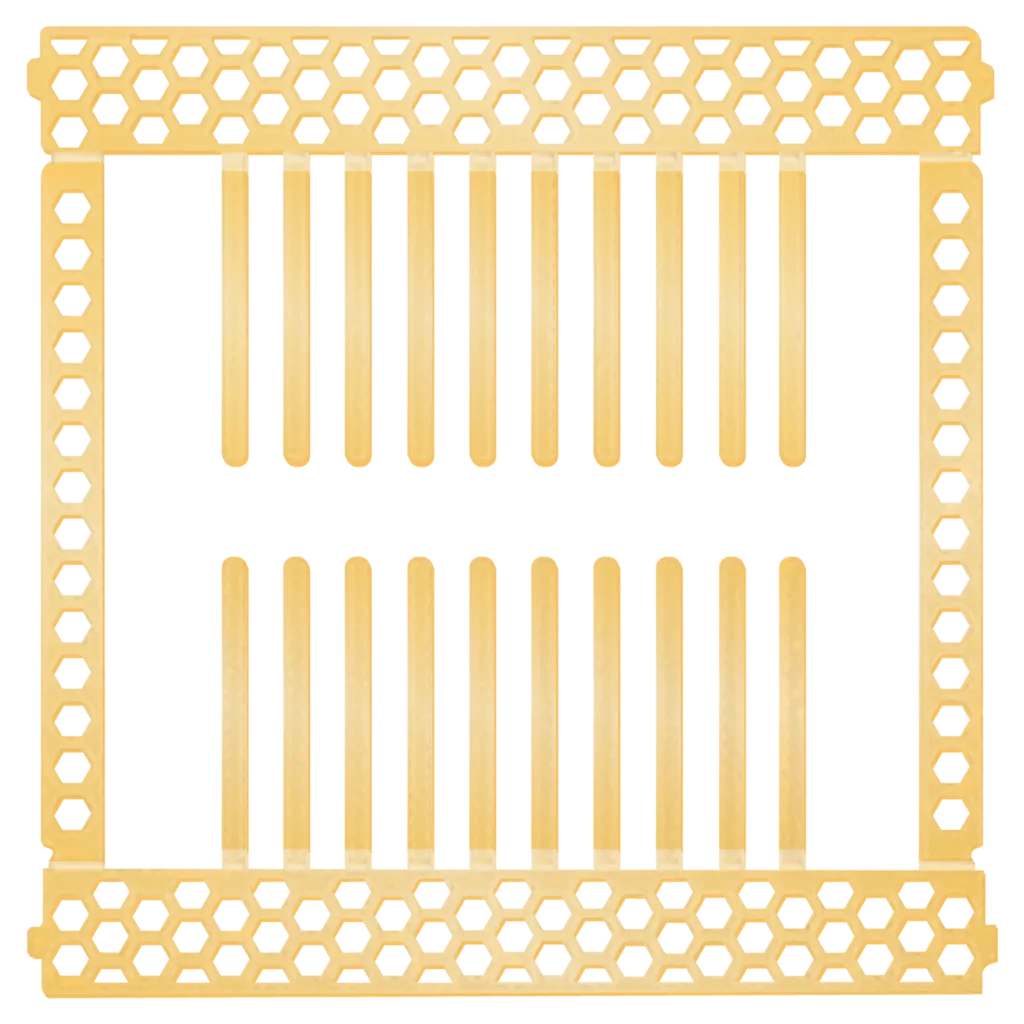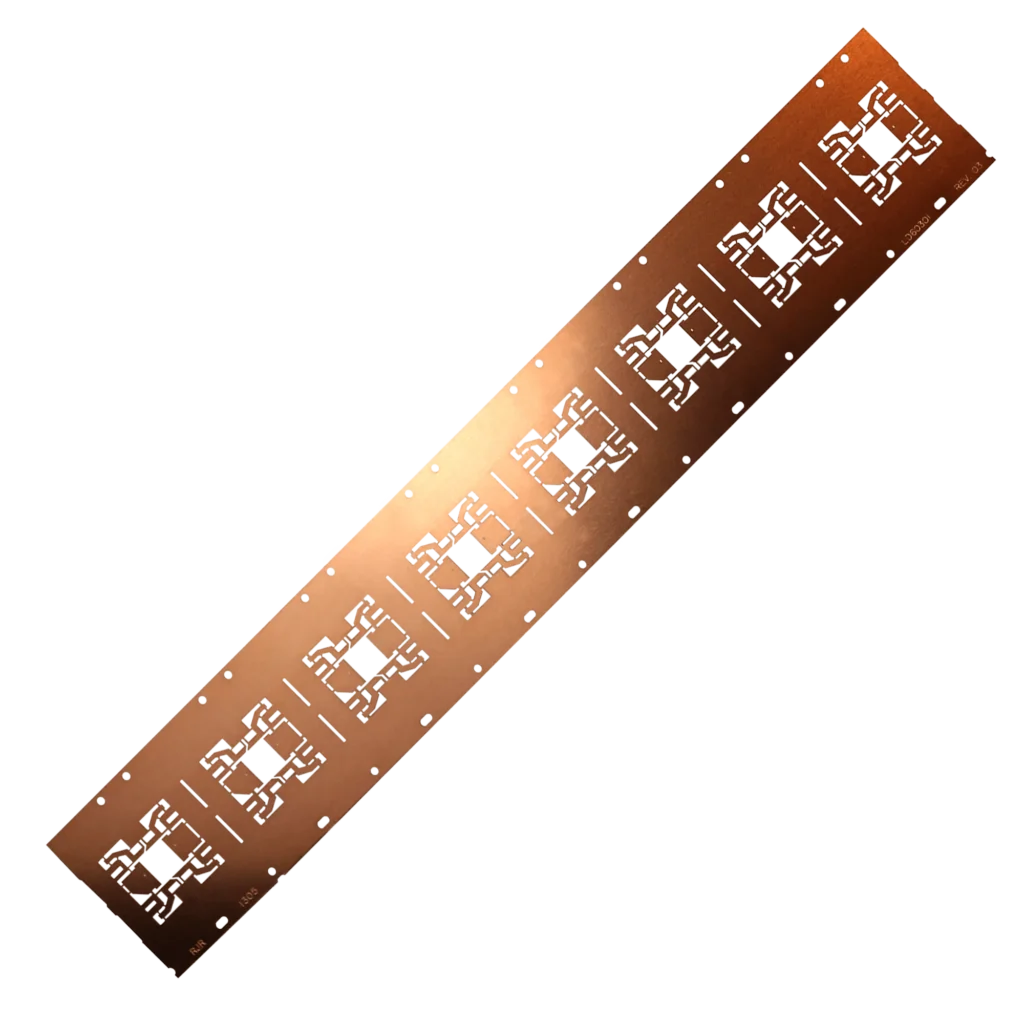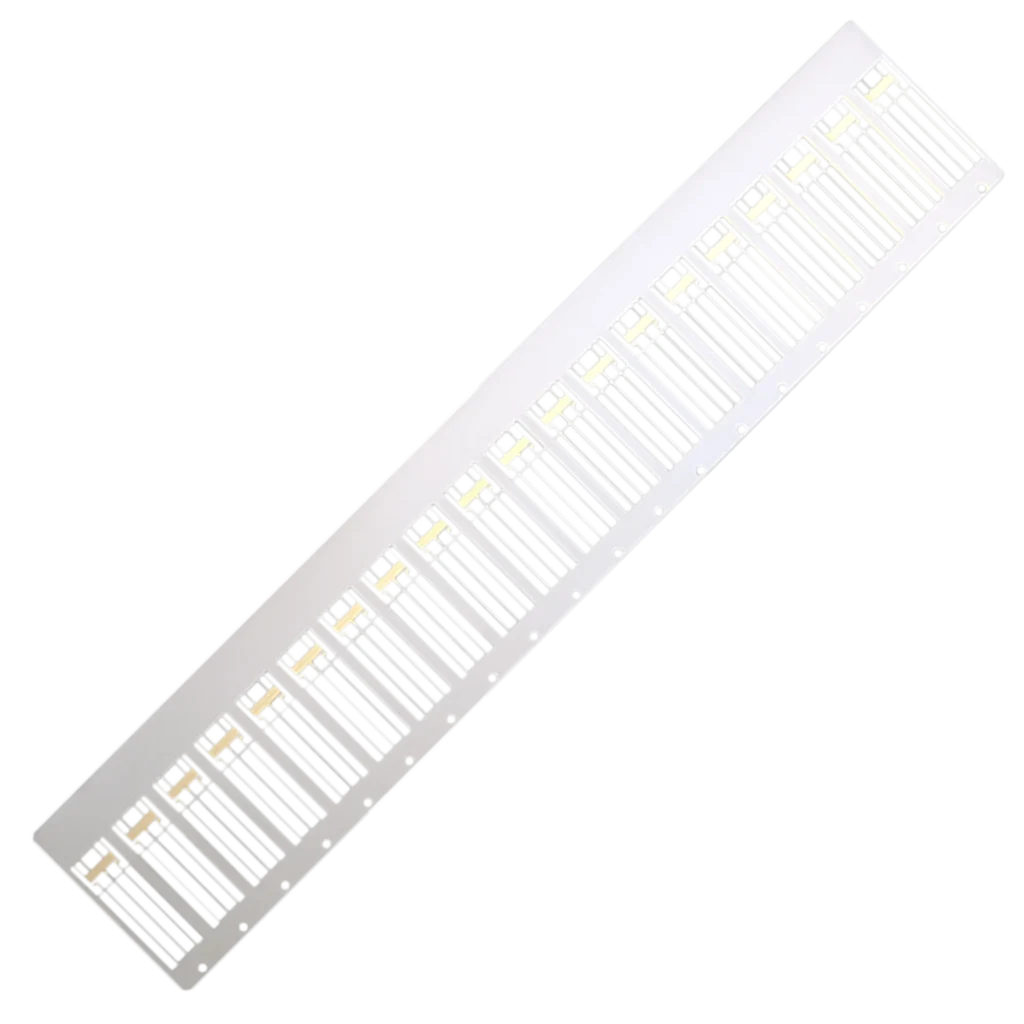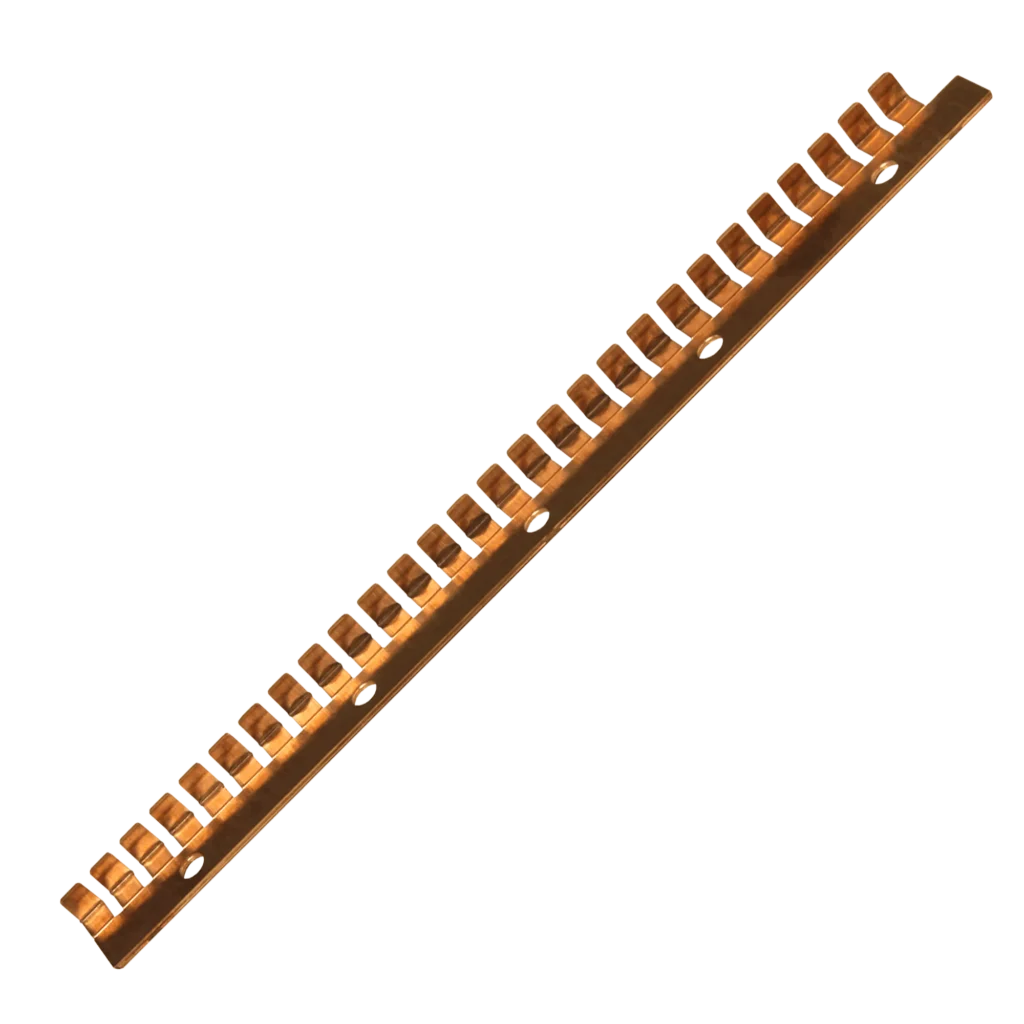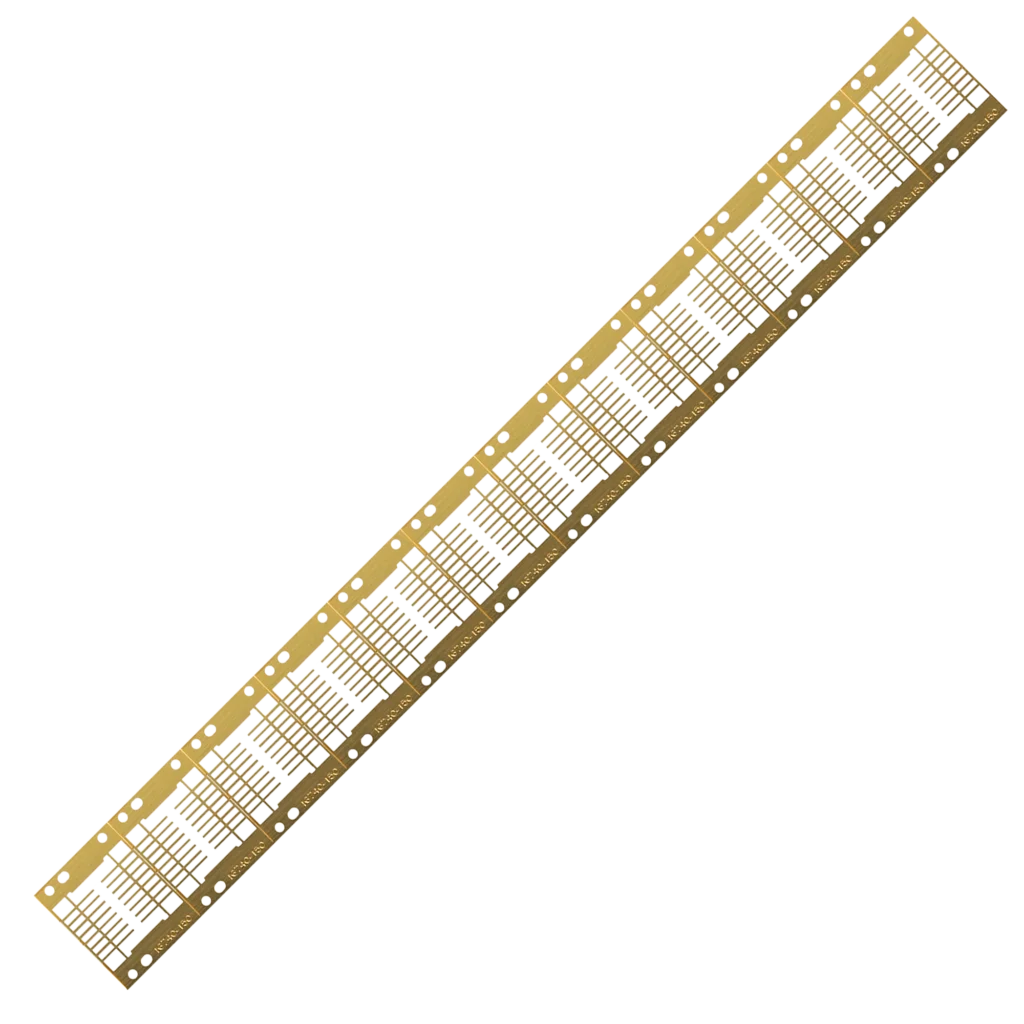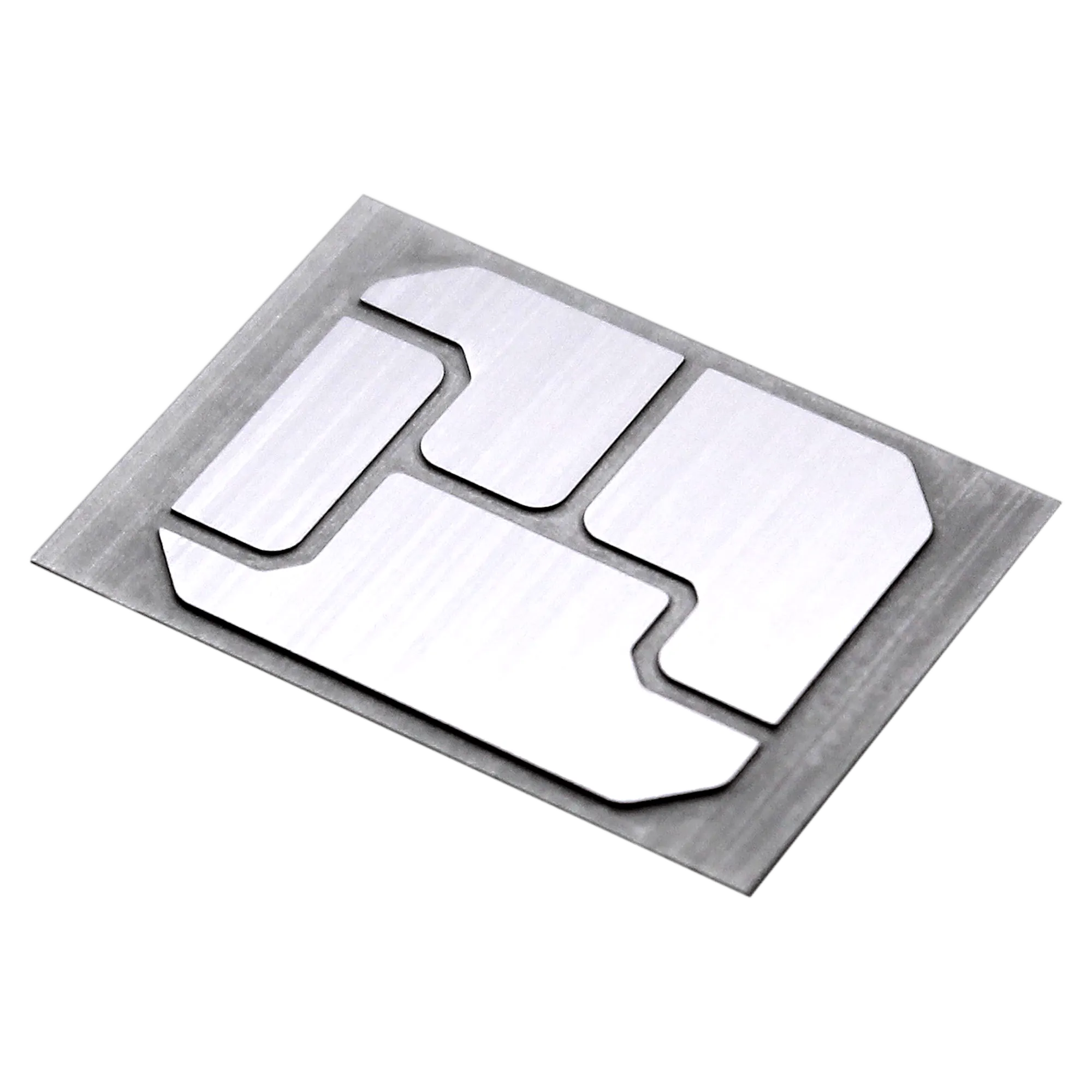

Modern semiconductor devices demand increasingly precise components as packages become smaller and more complex. The semiconductor lead frame provides the electrical and mechanical foundation that supports reliable semiconductor packaging and long-term device performance.
At Photofabrication Engineering, Inc. (PEI), we manufacture high-precision semiconductor lead frames using advanced photochemical etching. Our process delivers fine-pitch geometries, burr-free features, rapid design iteration, and tight dimensional control without the tooling constraints of traditional stamping.
From prototype through production, PEI helps engineers develop high-quality lead frames for today’s advanced electronic components.
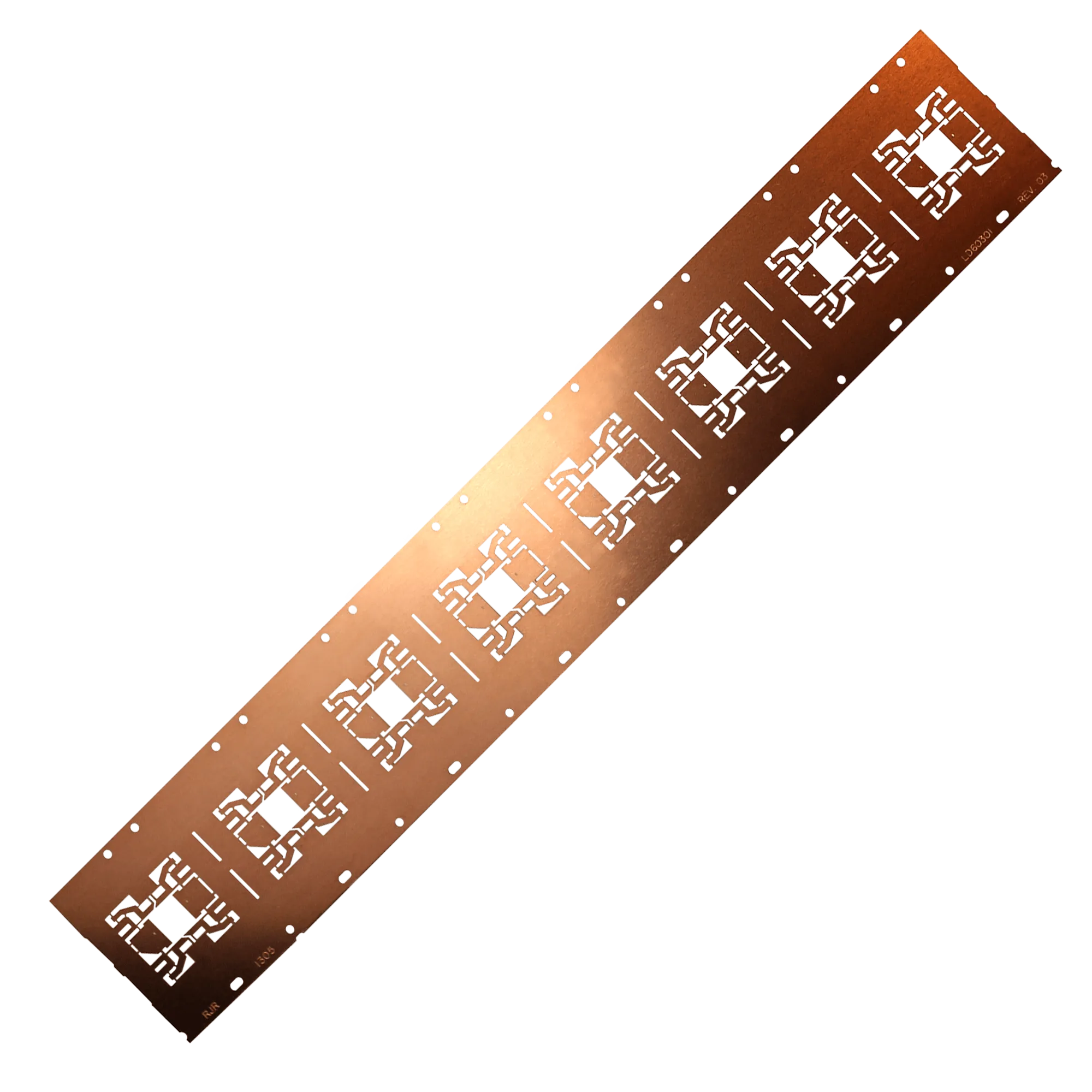
A semiconductor lead frame is the metal framework that provides both the mechanical support and electrical interconnection between a semiconductor die and the outside world. Although hidden within the finished package, the lead frame plays a vital role in package performance, reliability, and manufacturability.
In simple terms, the lead frame acts as the interface between the silicon chip and the printed circuit board. It securely supports the die while providing conductive pathways that carry electrical signals into and out of the device.
A typical semiconductor lead frame consists of several key features:
Together, these features create a stable platform for semiconductor packaging while supporting consistent electrical performance throughout the product’s service life.
Today, semiconductor lead frames are used in numerous package styles, including:
Their versatility continues to make lead frames one of the most widely used packaging technologies across the electronics industry.
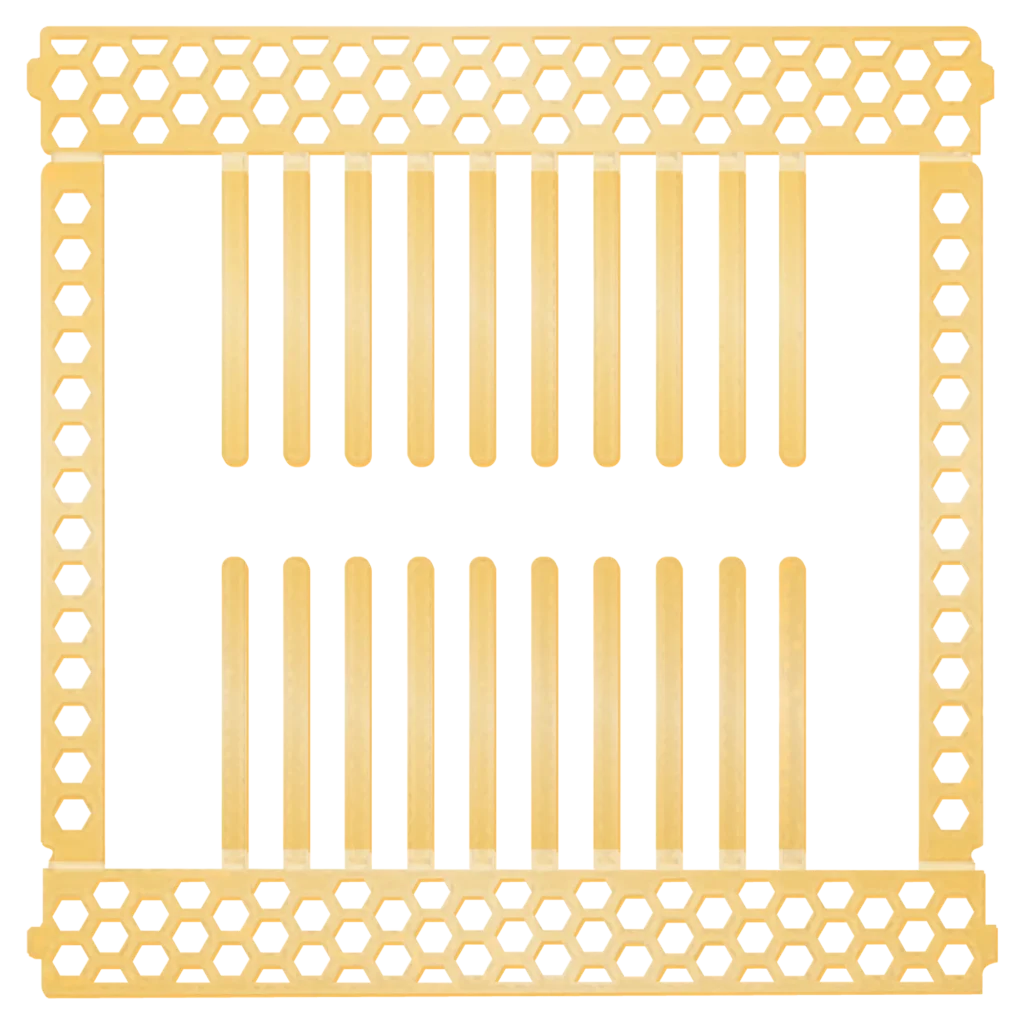
Although lead frames are often viewed simply as electrical conductors, they perform several equally important functions within the finished package.
The primary role of the lead frame is to establish reliable electrical connections between the semiconductor die and external circuitry. Precise conductor placement helps ensure signal integrity while supporting increasingly dense package layouts.
The lead frame also provides structural support throughout the assembly process and during the operational life of the device. Maintaining consistent lead frame geometry is critical for accurate die placement, wire bonding, encapsulation, and final package reliability.
As semiconductor devices become more powerful, thermal management has become equally important.
The die pad and surrounding conductive structure help transfer heat away from the active device, improving operating temperatures and supporting long-term reliability. Material selection and overall lead frame design directly influence thermal properties and package efficiency.
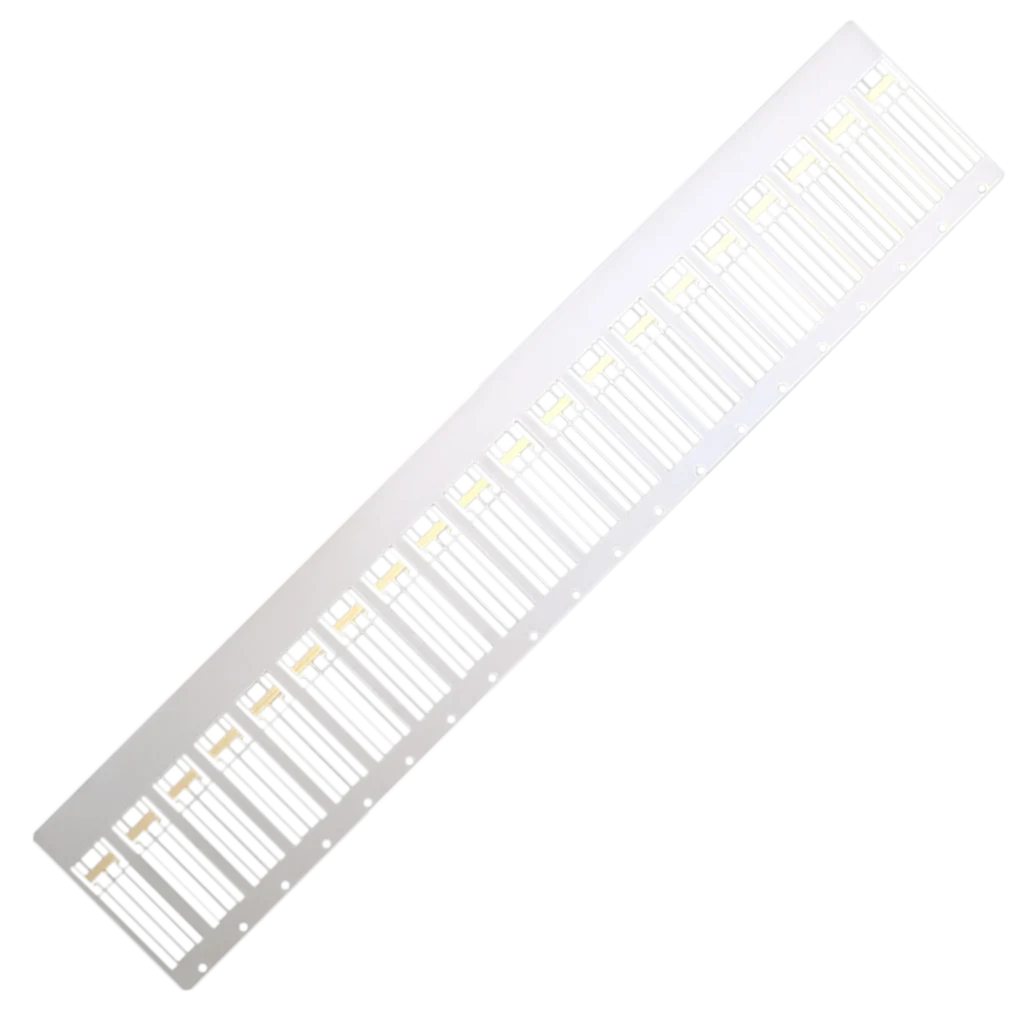
Designing a high-performance semiconductor lead frame requires balancing electrical performance, thermal management, manufacturability, and mechanical stability. As package sizes shrink and device complexity increases, lead frames must achieve tighter tolerances and finer feature resolution.
Modern semiconductor packages require narrow lead spacing and intricate geometries to support higher pin counts in smaller footprints. Photochemical etching produces these fine features without deformation or burrs, making it ideal for high-density designs.
Dimensional accuracy is essential for die alignment, wire bonding, assembly automation, and long-term package reliability. PEI’s photochemical etching process delivers highly repeatable lead frame geometries that support consistent manufacturing yields.
As electronic devices become smaller, lead frame designs must maximize functionality within limited space. Photochemical etching enables intricate layouts that would be difficult or costly to achieve using conventional manufacturing methods.
Lead spacing, conductor geometry, material selection, and package design all influence signal integrity and heat dissipation. Optimizing these factors improves electrical performance and thermal management without increasing package size.
Successful lead frame designs balance performance with efficient production. Engineers must consider material selection, feature spacing, lead width, assembly methods, plating requirements, and production scalability. By eliminating tooling constraints, photochemical etching gives engineers greater design flexibility while supporting reliable, repeatable manufacturing.
As semiconductor packages become smaller and more complex, manufacturing methods must produce intricate lead frame designs without compromising dimensional accuracy or material performance. Photochemical etching is ideal for semiconductor lead frames because it creates precise features without mechanical stress or heat distortion, giving engineers greater design flexibility and faster development cycles.
The process uses a light-sensitive photoresist and digital artwork to define the lead frame geometry before exposed metal is removed with a controlled chemical etchant. Because no hard tooling is required, designs can be updated quickly while maintaining tight dimensional control.
Learn more about our Precision Chemical Machining Process.
Photochemical etching consistently produces narrow lead widths, intricate tie bars, complex die pads, and fine-pitch conductor layouts. Since part complexity has minimal impact on manufacturing cost, engineers can optimize designs for performance rather than tooling limitations.
Unlike stamping or machining, photochemical etching produces clean, burr-free lead frames without introducing mechanical stress or heat-affected zones. This improves plating, wire bonding, assembly consistency, and long-term package reliability while maintaining flat, dimensionally stable components.
Without hard tooling, engineers can rapidly modify designs throughout development by simply updating the digital artwork. This supports faster design optimization, lower prototype costs, rapid validation, and a shorter path from concept to production.
Material selection plays a critical role in the performance and reliability of semiconductor lead frames. Electrical conductivity, thermal management, mechanical strength, and dimensional stability must all be carefully balanced to meet the requirements of modern microelectronic applications.
PEI works with a range of metals selected to satisfy these demanding electrical, mechanical, and thermal requirements.

Copper alloys, including C110 and C194, are widely used for semiconductor lead frames due to their excellent electrical conductivity and high thermal conductivity. These materials efficiently transfer electrical signals while dissipating heat away from the semiconductor die, making them ideal for high-performance electronic components.
Learn more about Copper.

Iron-nickel alloys such as Alloy 42 and Kovar are commonly specified when thermal expansion must closely match silicon or ceramic packages. Their dimensional stability helps reduce mechanical stress during thermal cycling, improving package reliability in demanding applications.
Learn more about Nickel.

Phosphor bronze offers a combination of good electrical conductivity, strength, and excellent spring properties. It is frequently selected for lead frame designs that require increased mechanical durability while maintaining reliable electrical performance.
Aluminum provides a lightweight solution with good electrical and thermal performance for applications where reducing overall package weight is important. Its corrosion resistance also makes it suitable for a range of electronic packaging environments.
Learn more about Aluminum.
Every semiconductor application has unique performance requirements. PEI works closely with customers to evaluate the operating environment, assembly method, and package design to recommend the most appropriate material for each application.
Selecting the right material requires balancing electrical and thermal conductivity, thermal expansion, mechanical strength, corrosion resistance, plating compatibility, assembly methods, and the operating environment.
PEI works closely with customers to recommend materials that optimize both package performance and manufacturability.
Stamping has long been used for high-volume semiconductor lead frame production, but as packages become smaller and more complex, photochemical etching offers significant advantages throughout development and manufacturing.
Stamping relies on expensive hard tooling, with every design revision requiring new or modified dies. Photochemical etching eliminates this constraint by using digital artwork, allowing rapid design changes without delaying development.
Photochemical etching produces narrow lead widths, intricate die pads, precision tie bars, and complex conductor layouts with exceptional accuracy. This makes it well suited to today’s fine-pitch semiconductor packaging requirements.
Unlike stamping, which can create burrs that require secondary processing, photochemical etching delivers clean, burr-free edges. This improves plating consistency, wire bonding, assembly yield, and long-term package reliability.
Photochemical etching allows engineers to quickly evaluate new lead frame designs without investing in tooling, making it ideal for prototype development and early-stage engineering validation while reducing overall development costs.
Although highly effective for prototyping, photochemical etching also scales efficiently into production. The same manufacturing process delivers consistent quality and tight dimensional control from initial prototypes through full production runs.
Semiconductor lead frames are used across an extensive range of electronic devices, supporting everything from consumer electronics to aerospace systems. As package complexity continues to increase, lead frames remain fundamental to achieving reliable electrical performance, efficient thermal management, and consistent manufacturing quality.
PEI manufactures precision lead frames for applications where dimensional accuracy, repeatability, and fine-feature capability are critical to overall package performance.
Integrated circuits remain one of the largest applications for semiconductor lead frames. Whether packaging analog, digital, mixed-signal, or logic devices, the lead frame provides the structural foundation that supports die attachment, electrical interconnection, and heat dissipation.
Photochemical etching allows engineers to create increasingly complex lead frame geometry for modern integrated circuits while maintaining the tight tolerances required for automated assembly.
Power devices generate significant heat during operation, making thermal management a key design consideration.
Etched lead frames help improve heat transfer from the semiconductor die while maintaining precise conductor placement and mechanical stability. Copper-based materials are commonly selected for these applications due to their excellent electrical conductivity and thermal properties.
Typical applications include:
Precision analog electronics require highly consistent conductor geometry to support stable signal transmission and reliable package assembly.
PEI produces etched lead frames used in analog amplifiers, converters, sensor interfaces, and mixed-signal devices where dimensional repeatability directly influences manufacturing yield.
Radio frequency devices often require intricate lead patterns, controlled conductor spacing, and exceptional dimensional consistency.
Photochemical etching enables the fine-feature resolution required for RF packages while producing burr-free edges that support reliable plating, assembly, and electrical performance.
Many sensor packages incorporate delicate semiconductor structures that demand precise alignment and stable mechanical support.
Etched lead frames are commonly used for:
The ability to manufacture intricate features without mechanical deformation makes photochemical etching particularly valuable for these applications.
As semiconductor packages continue to evolve, manufacturers increasingly require lead frames capable of supporting:
Photochemical etching provides the flexibility needed to meet these evolving requirements while reducing development risk and accelerating product introduction.
Semiconductor lead frame development often requires multiple design iterations to optimize electrical performance, package dimensions, and manufacturability. PEI’s photochemical etching process supports this iterative workflow by enabling rapid design changes without hard tooling.
Design updates to lead spacing, die pads, or conductor geometry can be made by simply modifying the digital artwork, allowing engineers to evaluate multiple configurations quickly while reducing development time.
PEI supports every stage of development, from prototypes and pilot builds to full-scale production. Prototype lead frames are manufactured using the same precision process as production parts, ensuring reliable testing, qualification, and a seamless transition to manufacturing with consistent quality and repeatability.
For more than 50 years, PEI has partnered with semiconductor manufacturers and technology companies to produce precision-etched lead frames for demanding electronic applications. We work closely with engineering teams to optimize designs for performance, manufacturability, and long-term reliability.
Our advanced photochemical etching capabilities produce intricate lead frame designs with tight dimensional control, burr-free edges, and exceptional repeatability across prototype and production volumes.
PEI manufactures semiconductor lead frames from a wide range of materials, including copper alloys, nickel-iron alloys, Kovar, phosphor bronze, aluminum, stainless steel, and other specialty metals.
Our engineers help select the best material based on conductivity, thermal performance, expansion characteristics, and application requirements.
From rapid prototyping to full-scale manufacturing, PEI provides engineering collaboration, production support, secondary operations, and rigorous inspection to ensure every lead frame meets exact specifications.
Our engineering team works with customers to optimize lead frame geometry, improve manufacturability, and reduce production costs while maintaining electrical and thermal performance. Combined with comprehensive quality control and inspection, this collaborative approach delivers consistent, repeatable lead frames for today’s most demanding semiconductor packaging applications.
Quality is built into every stage of PEI’s manufacturing process.
As a trusted supplier to high-reliability industries, we maintain robust quality systems that support the demanding requirements of semiconductor, aerospace, medical, and defense applications.
With ISO-9001:2008 and AS9100 certifications, PEI was also granted certification under the International Traffic in Arms Regulation (ITAR) in 2010, enabling it to provide weapon system components and accessories in compliance with the Code of Federal Regulations implemented by the U.S. Department of State.
Our rigorous inspection processes and testing procedures ensure that every product we produce meets stringent accuracy, reliability, and performance standards.
Learn more about our Precision Chemical Machining Process and Quality Capabilities.
Whether you’re developing a new semiconductor device or optimizing an existing package, PEI delivers etched lead frames engineered for performance, reliability, and scalability.
As semiconductor packaging continues to evolve, precision manufacturing becomes increasingly important. Fine-pitch designs, tighter tolerances, improved thermal performance, and faster development cycles all demand manufacturing processes capable of keeping pace with innovation.
PEI combines decades of photochemical etching expertise with engineering collaboration, advanced materials knowledge, and U.S.-based manufacturing to deliver semiconductor lead frames that support today’s most demanding applications.
Whether you’re developing a next-generation integrated circuit, refining an RF package, or accelerating a new product introduction, our team is ready to help.
Need guidance on material selection, lead frame geometry, manufacturability, or prototype development? Contact Us to discuss your application and identify the best solution for your semiconductor package.