For industries that rely on the strength, durability, and performance of their components, titanium is a clear material choice. And it’s easy to see why.
Titanium is often called a wonder metal due to its lightweight, unmatched strength, and corrosion-resistant properties. But what truly sets this exceptional metal apart is the transformative process known as titanium etching. By photochemical etching titanium , engineers can create intricate designs while preserving the material’s inherent properties. These attributes make titanium and titanium alloys highly desirable materials for the production of high-precision, high-performance components.
Perfect for various applications within the aerospace, medical, defense, and electronics industries, titanium-etched components ensure performance and reliability in even the harshest environments.
As the trusted industry leader in titanium etching, the Photofabrication Engineering, Inc. (PEI) team has a long history of engineering excellence and a focus on providing titanium parts with the highest level of quality.
In this article, we look at the multitude of benefits titanium etching delivers and the diverse applications it offers leading industries worldwide.
How Titanium Chemical Etching Works
Titanium is one of the most challenging engineering materials to machine conventionally, particularly when components require intricate features, thin sections, or exceptionally high dimensional accuracy.
Photochemical machining provides an alternative approach by removing material chemically rather than mechanically, enabling engineers to produce complex titanium parts while preserving the material’s inherent performance characteristics.
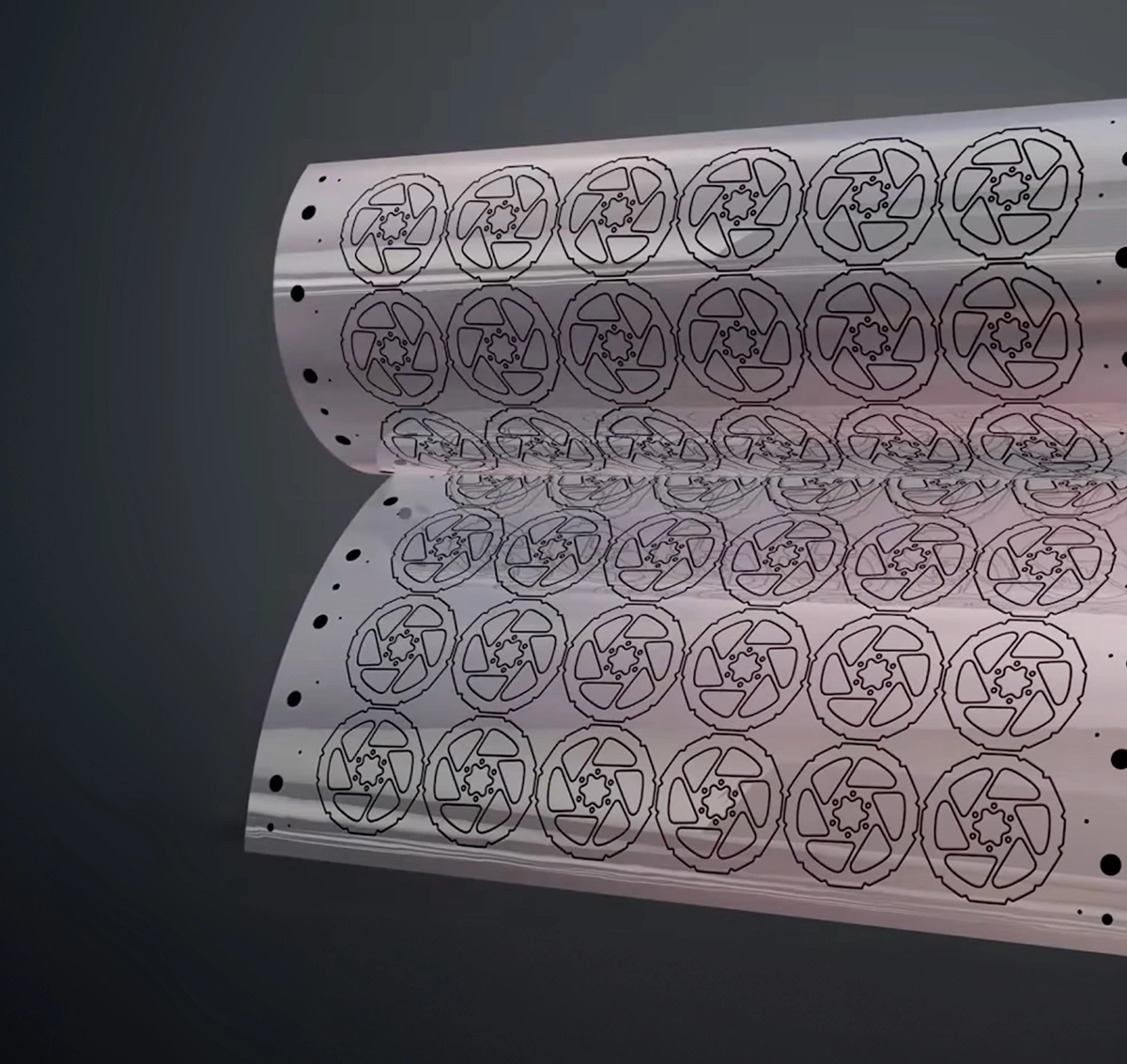
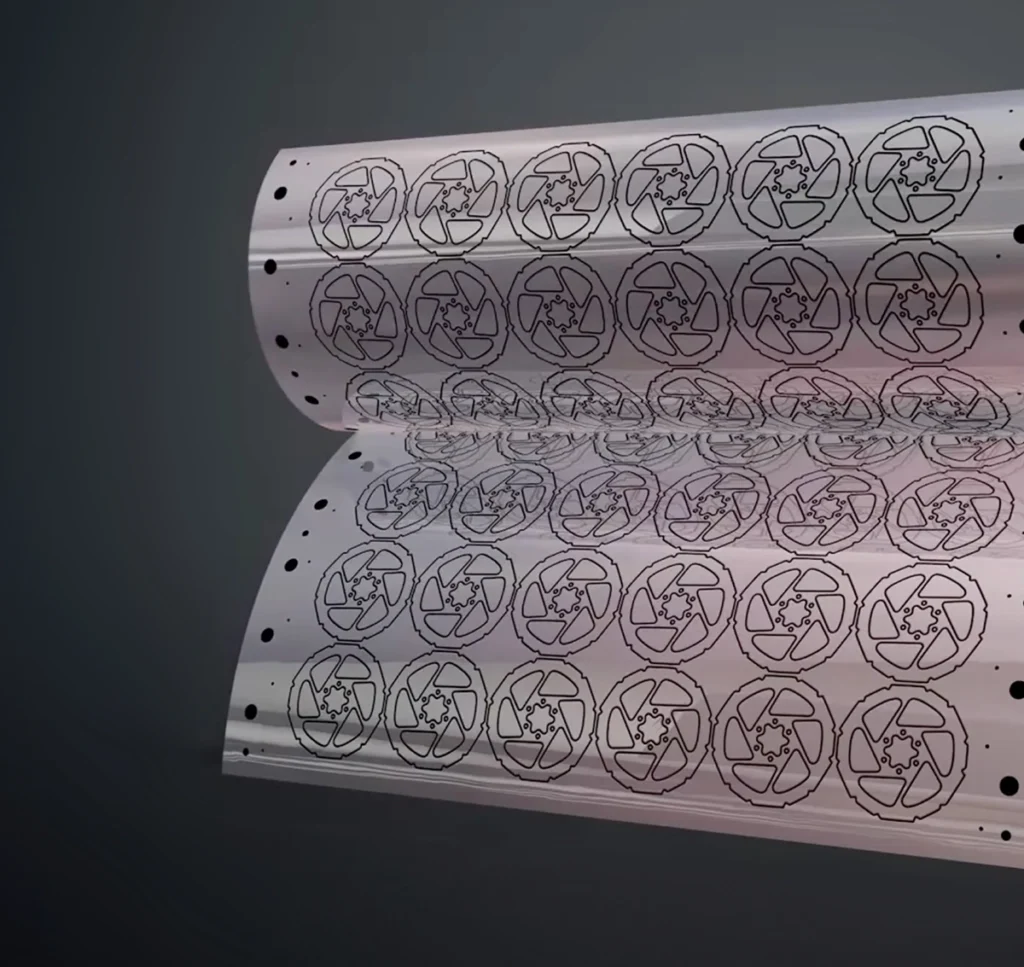
Unlike conventional machining or punching operations, chemical etching titanium uses digital artwork instead of hard tooling. This allows design changes to be implemented quickly, reducing development time while maintaining consistent part quality from prototype through production.
The Photochemical Machining Process
Photochemical etching is a precise and controlled technique used to produce highly accurate titanium parts.
It begins with selecting a suitable titanium chemical etching solution, often involving hydrofluoric acid. The exposed areas of titanium are removed using a carefully controlled chemical etching process, sometimes referred to as chemical milling. Rather than cutting the material with mechanical tools, the chemistry selectively dissolves the exposed metal while leaving protected areas intact.
This titanium etching process offers excellent precision, repeatability, and scalability for etched titanium parts, making it an efficient and cost-effective method for producing high-quality titanium parts with complex geometries.
Learn more about our Precision Precision Chemical Machining Process.
Preserving Titanium's Mechanical Properties
One of the greatest advantages of photochemical machining is its ability to preserve titanium’s original mechanical properties.
Traditional manufacturing methods such as machining, punching, or laser cutting can introduce localized stresses or heat affected zones that alter the material’s microstructure. These changes may affect dimensional stability, fatigue performance, or long-term reliability, particularly in demanding aerospace and medical applications.
Photochemical machining removes material chemically, eliminating these concerns while maintaining the integrity of the parent material. The result is a finished component that retains the full performance characteristics of the original titanium alloy.
Unlocking the Power of Precision: The Benefits of Titanium Etching
Titanium etching provides exceptional design flexibility, enabling the creation of intricate, durable components across a range of industries.
This innovative photochemical etching process offers a range of benefits to both manufacturers and end users, making it the ideal choice for applications where precision, performance, and durability are non-negotiable.
The key benefits of this precision process include:
- Precision and Control: With titanium etching, manufacturers can remove material with unparalleled precision and control. This level of accuracy is especially vital in applications where tight tolerances are required, such as fuel cells, oxygen generators, and hydrogen generators for renewable energy, custom medical implants, and microelectronics.
- Improved Surface Finish: Etching enhances the aesthetic and functional appeal of titanium components. Smoother surfaces not only enhance the visual allure but also reduce friction and wear in moving parts, leading to increased longevity.
- Customization: The adaptability of titanium etching makes it an ideal choice for industries requiring unique, non-standard components (aerospace, defense, and medical). Customizing the process to meet specific design requirements ensures that each piece meets its intended purpose.
- Enhanced Bonding: Etching doesn’t just stop at surface modification; it creates a textured surface that’s perfect for improving the adhesion of coatings, adhesives, or other materials. In sectors like medical devices and aerospace, where bonding strength is critical, this advantage is invaluable.
- Corrosion Resistance: Titanium is already renowned for its corrosion resistance, but etching takes it a step further. It enhances the material’s ability to withstand even the harshest environments, such as marine or chemical processing applications.
- Burr-Free Manufacturing: Mechanical cutting operations frequently create burrs that require secondary finishing before assembly. Photochemical machining produces clean, burr-free profiles directly from the etching process, reducing post-processing while improving part consistency. This is particularly valuable for precision components where edge quality directly influences assembly, sealing, or overall product performance.
- No Heat-Affected Zones: Laser cutting generates localized heat that can alter the material surrounding the cut edge. Because chemical etching removes material without thermal input, titanium components are manufactured with no heat-affected zones, preserving dimensional accuracy and material performance throughout the part.
- No Mechanical Stress: Conventional machining and stamping apply physical force during material removal. These forces can introduce distortion, residual stress, or deformation, particularly in thin sections. Photochemical machining eliminates mechanical loading entirely, allowing delicate titanium components to remain flat, stable, and dimensionally consistent throughout production.
- Complex Geometries: Titanium’s hardness can make intricate machining both difficult and expensive. Photochemical machining allows engineers to produce highly detailed geometries.
- Extremely Tight Tolerances: Many titanium applications require exceptional dimensional control to ensure proper assembly and long-term performance.PEI’s photochemical machining process routinely produces components with extremely tight tolerances, supporting applications where precision directly affects reliability.
The combination of titanium’s exceptional material properties and PEI’s advanced photochemical machining expertise enables engineers to produce lightweight, corrosion-resistant components with outstanding dimensional accuracy. Whether developing prototypes or scaling into production, titanium etching provides a manufacturing solution that combines precision, repeatability, and design freedom while avoiding the mechanical stress and thermal effects associated with conventional fabrication methods.
Titanium Materials and Grades
Selecting the appropriate titanium grade is one of the most important decisions in the design process. Different grades offer distinct combinations of strength, corrosion resistance, ductility, and manufacturability, making them better suited to particular applications and operating environments.
PEI works with a range of titanium materials to support precision components across the medical, aerospace, defense, electronics, and advanced technology sectors. Our engineering team collaborates with customers to ensure the selected material delivers the mechanical performance, manufacturability, and long-term reliability required for each application.
Learn more about our Titanium Material Capabilities.
Commercially Pure Titanium
Commercially Pure (CP) Titanium is valued for its outstanding corrosion resistance, excellent formability, and exceptional biocompatibility. Although it offers lower strength than titanium alloys, its combination of durability and chemical stability makes it ideal for components exposed to aggressive environments or requiring direct contact with the human body.
Photochemically etched Commercially Pure Titanium is commonly used for:
- Medical implants and surgical components
- Chemical processing equipment
- Fuel cell plates
- Renewable energy systems
- Precision electronic components
The material’s excellent corrosion resistance also makes it suitable for marine and chemical processing environments where long service life is essential.
Titanium 6Al-4V
Titanium 6Al-4V is the most widely-specified titanium alloy for high-performance engineering applications. Its exceptional strength-to-weight ratio, fatigue resistance, and mechanical stability have made it one of the most widely used titanium alloys across aerospace, defense, and advanced medical manufacturing.
When combined with photochemical machining, Titanium 6Al-4V enables engineers to produce lightweight, highly accurate components with intricate geometries while maintaining the alloy’s superior performance characteristics.
Typical applications include:
- Aerospace structural components
- Defense systems
- Aircraft engine components
- Medical instruments
- Implantable medical devices
- Advanced sensor technologies
Material Selection Considerations
Choosing the right titanium grade depends on several design factors, including:
- Mechanical loading
- Operating environment
- Corrosion requirements
- Weight reduction goals
- Biocompatibility
- Manufacturing requirements
- Cost and production volume
PEI’s engineering team works closely with customers to evaluate these considerations early in development, ensuring every component is optimized for both performance and manufacturability.
Key Applications for Titanium Etching
Titanium’s unique combination of low weight, exceptional strength, corrosion resistance, and durability has made it indispensable across many of today’s most advanced industries. When paired with photochemical machining, these material advantages can be fully leveraged without compromising precision or dimensional accuracy.
Medical Components
Titanium has become one of the preferred materials for medical devices because of its outstanding biocompatibility and corrosion resistance.
PEI manufactures precision titanium components used in:
- Surgical meshes
- Implantable devices
- Orthopedic implants
- Medical instrumentation
- Diagnostic equipment
Photochemical machining enables the intricate geometries often required in medical applications while preserving the material’s integrity and eliminating burrs that could interfere with downstream processing.
Learn more about our Medical Industry Solutions.
Aerospace Components
Weight reduction remains a primary objective throughout the aerospace industry.
Titanium’s exceptional strength-to-weight ratio allows engineers to reduce mass while maintaining structural performance, making it ideal for:
- Aircraft structures
- Engine components
- Actuation systems
- Satellite hardware
- Thermal management assemblies
Because photochemical machining produces parts without introducing mechanical stress or heat-affected zones, engineers can specify increasingly complex geometries while maintaining dimensional consistency and long-term reliability.
Explore our Aerospace & Defense Manufacturing Capabilities.
Defense Applications
Defense programs frequently require components capable of performing under extreme environmental and operational conditions.
PEI supports defense manufacturers producing precision titanium components for:
- Communications systems
- Guidance assemblies
- Sensor platforms
- Lightweight structural components
- Thermal management systems
Our photochemical machining capabilities allow engineers to develop highly accurate components while supporting rapid prototyping and scalable production.
Learn more about our defense solutions.
Electronics and Advanced Technology
As electronic devices continue to become smaller and more sophisticated, manufacturers require lightweight materials capable of supporting increasingly complex designs.
Titanium etching is used to manufacture precision components for:
- MEMS devices
- Sensors
- Electronic housings
- RF components
- Advanced instrumentation
- Scientific equipment
The ability to produce intricate features without distortion makes photochemical machining particularly valuable for emerging technologies where precision directly influences performance.
See how we support the microelectronics industry.
Renewable Energy
Titanium’s unique properties, such as its exceptional strength-to-weight ratio, corrosion resistance, and durability, make it an ideal material for producing intricate components crucial to renewable energy applications.
From solar panels and wind turbines to fuel cells and batteries, photochemically etched titanium components play a pivotal role in enhancing the efficiency and longevity of various renewable energy technologies.
PEI has become a leader in the renewable energy sector, providing pure titanium anode and cathode plates for fuel cells, oxygen generators, and hydrogen generators.
Automotive
With titanium etching, lightweight parts can be created for the automotive industry that contribute to improved fuel efficiency. Titanium etching can also enhance vehicle aesthetics by producing interior and exterior decorative components.
Titanium Etching vs. Traditional Manufacturing
While titanium can be processed using conventional manufacturing methods, these approaches often introduce compromises that affect precision, cost, or material performance.
Photochemical machining provides a fundamentally different manufacturing approach that eliminates many of these limitations.
Machining Limitations
Titanium is well known for being difficult to machine. Its strength and low thermal conductivity increase tool wear, extend machining times, and make intricate geometries challenging to produce economically.
Photochemical machining removes material chemically rather than mechanically, allowing engineers to create highly detailed components without tool wear or cutting forces.
Heat and Stress Considerations
Laser cutting and conventional machining may introduce localized heating or residual stresses that affect dimensional stability and material performance.
Photochemical machining produces components with:
- No heat-affected zones
- No mechanical stress
- No burrs
- Excellent dimensional consistency
These characteristics are especially important in medical, aerospace, and defense applications where long-term reliability is critical.
Tooling Requirements
Traditional stamping requires expensive hard tooling that can significantly increase both development costs and lead times.
Photochemical machining eliminates this requirement entirely by using digital artwork rather than physical dies. Design revisions can therefore be implemented rapidly without delaying development or increasing tooling investment.
Greater Design Flexibility
One of the greatest advantages of titanium etching is the freedom it gives engineers during product development.
Complex internal features, intricate profiles, narrow slots, precision apertures, and lightweight structures can all be incorporated without the manufacturing limitations imposed by traditional machining processes.
This flexibility enables engineers to optimize component performance rather than compromise designs for manufacturing convenience.
Why Choose PEI for Titanium Etching
Unmatched Precision. Proven Expertise. Industry-Leading Quality.
Choosing the right manufacturing partner is just as important as selecting the right material or process.
PEI is the trusted choice for titanium photo-chemical etching, delivering burr-free, stress-free, and dimensionally precise parts for aerospace, medical, defense, electronics, and advanced technology sectors. Backed by AS9100D, ISO 9001/14001, ITAR, RoHS, and NADCAP certifications, we meet the most rigorous global quality and compliance standards.
Proven Photochemical Machining Expertise
Titanium has unique machining challenges, but it is one of the materials PEI knows best.
Our team has decades of experience manufacturing chemically etched titanium components for highly regulated industries where precision, repeatability, and quality are critical. From early-stage prototypes to full production, we help engineers optimize designs for manufacturability without sacrificing performance.
Using advanced photochemical machining, we produce intricate titanium components with:
- Burr-free edges
- Complex internal geometries
- Tight dimensional control
- Excellent repeatability
- Rapid prototype turnaround
- Scalable production capability
Extensive Titanium Material Experience
Not every titanium application requires the same alloy or manufacturing approach.
PEI works with both Commercially Pure Titanium and Titanium 6Al-4V, helping customers select the most appropriate material based on mechanical performance, corrosion resistance, weight requirements, and application demands.
Whether the project involves a medical implant, aerospace assembly, defense component, or precision electronic device, our engineering team provides guidance throughout material selection and product development.
Explore our Titanium Material Capabilities.
Precision Manufacturing Capabilities
Our investment in advanced photochemical machining technology allows us to manufacture titanium components that consistently meet demanding engineering specifications.
PEI’s capabilities include:
- Thin titanium components
- Intricate geometries
- Fine apertures and slots
- Lightweight structural features
- Consistent dimensional accuracy
- Prototype through production volumes
By eliminating the tooling constraints associated with traditional manufacturing methods, we help customers accelerate development while maintaining exceptional quality throughout production.
Learn more about our Precision Precision Chemical Machining Capabilities.
Prototype-to-Production Support
Many titanium projects begin with rapid prototyping before progressing into production.
Because photochemical machining uses digital tooling, design revisions can be implemented quickly without the expense or delay of new hard tooling. This allows engineering teams to validate designs faster while maintaining process continuity as production volumes increase.
From initial concepts to production-ready components, PEI provides a seamless manufacturing pathway that reduces development risk and shortens time to market.
Engineering Collaboration
Successful titanium components begin with good engineering collaboration.
Our engineers work directly with customers to review:
- Material selection
- Feature feasibility
- Manufacturability
- Tolerance requirements
- Production strategy
- Cost optimization
By identifying potential manufacturing challenges early, we help customers reduce redesigns, improve component performance, and streamline production.
Partner with the Trusted Experts in Titanium Etching
Here at PEI, we boast over 30+ years of experience creating intricate and precise titanium parts for various leading industries. Pioneers in laser cutting and etching pure titanium, our innovation and insight have opened up new possibilities for applications with their precision metal components.
As the trusted industry leader in titanium etching, our commitment to quality is unwavering, ensuring that every titanium component is crafted safely with unparalleled precision and durability while adhering to the rigorous standards set within each industry.
Because we make our own photochemical etching tools and have over 2,000 material part numbers in stock, we can offer quick turnaround at extremely competitive prices. Our proven photochemical etching process assures that tolerances can be held in all dimensions to within 10% of the material thickness, and changes in tooling design can be made quickly and cheaply.
Unlock the full potential of titanium with PEI’s advanced photochemical etching process. Contact the team or request a quote.